
Hold a Leica M camera, the unlatching mechanism of a high-end Swiss watch case, or the milled aluminum dial of an audio preamplifier. You are not simply observing aesthetics; you are reacting to a conversation between two surfaces separated by less than the width of a human hair.
When an end user touches an industrial assembly, their fingertips do not parse CAD files or bill of materials. The mechanoreceptors in human skin can resolve micro-vibrations generated by step edges as minute as 13 nanometers. When a slider rocks, when a volume knob hesitates before gripping, or when a seam catches fingernails unevenly across its length, the brain immediately tags the device as ephemeral.
Yet in contemporary industrial design departments, tolerances are frequently treated as a downstream problem, something to be solved by the manufacturing plant during tool qualification. This essay argues that tolerance stack-up is not a production footnote: it is the primary emotional medium of hardware engineering.
The psychology of tactile resistance
Yet in contemporary industrial design departments, tolerances are frequently treated as a downstream problem, something to be solved by the manufacturing plant during tool qualification. This essay argues that tolerance stack-up is not a production footnote: it is the primary emotional medium of hardware engineering.
Yet in contemporary industrial design departments, tolerances are frequently treated as a downstream problem, something to be solved by the manufacturing plant during tool qualification. This essay argues that tolerance stack-up is not a production footnote: it is the primary emotional medium of hardware engineering.
"If the end user notices the fit, you have already compromised the illusion of permanence."
— WORKSHOP RULE NO. 14, TRIDIAST DESIGN HANDBOOK
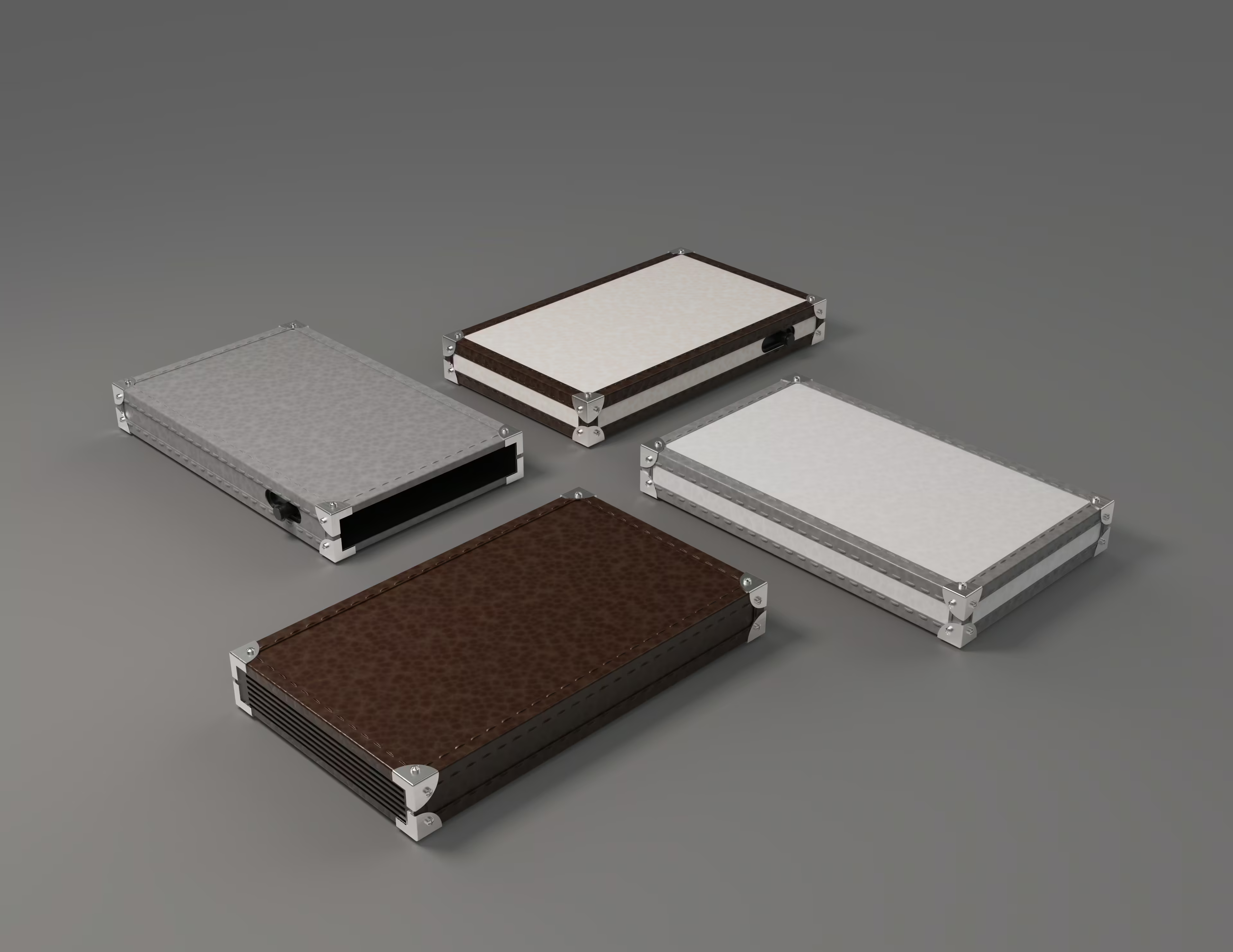
FIG 01. High-speed 5-axis ball-end finishing of an internal guide rail.
FIG 01. High-speed 5-axis ball-end finishing of an internal guide rail.
The psychology of tactile resistance
Yet in contemporary industrial design departments, tolerances are frequently treated as a downstream problem, something to be solved by the manufacturing plant during tool qualification. This essay argues that tolerance stack-up is not a production footnote: it is the primary emotional medium of hardware engineering.
Yet in contemporary industrial design departments, tolerances are frequently treated as a downstream problem, something to be solved by the manufacturing plant during tool qualification. This essay argues that tolerance stack-up is not a production footnote: it is the primary emotional medium of hardware engineering.
The psychology of tactile resistance
Yet in contemporary industrial design departments, tolerances are frequently treated as a downstream problem, something to be solved by the manufacturing plant during tool qualification. This essay argues that tolerance stack-up is not a production footnote: it is the primary emotional medium of hardware engineering.
Yet in contemporary industrial design departments, tolerances are frequently treated as a downstream problem, something to be solved by the manufacturing plant during tool qualification. This essay argues that tolerance stack-up is not a production footnote: it is the primary emotional medium of hardware engineering.